1743
I give unto my son George Washington and his heirs the land I now live on which I purchased of the Executrix of Mr. William Strother, deceased, and one moiety of my land lying on Deep Run and ten Negro slaves.
George Washington, age 11, inherits 10 enslaved individuals in his father’s will.
Washington Farms
Washington rents and begins farming Mount Vernon with a workforce of about 36 enslaved individuals.
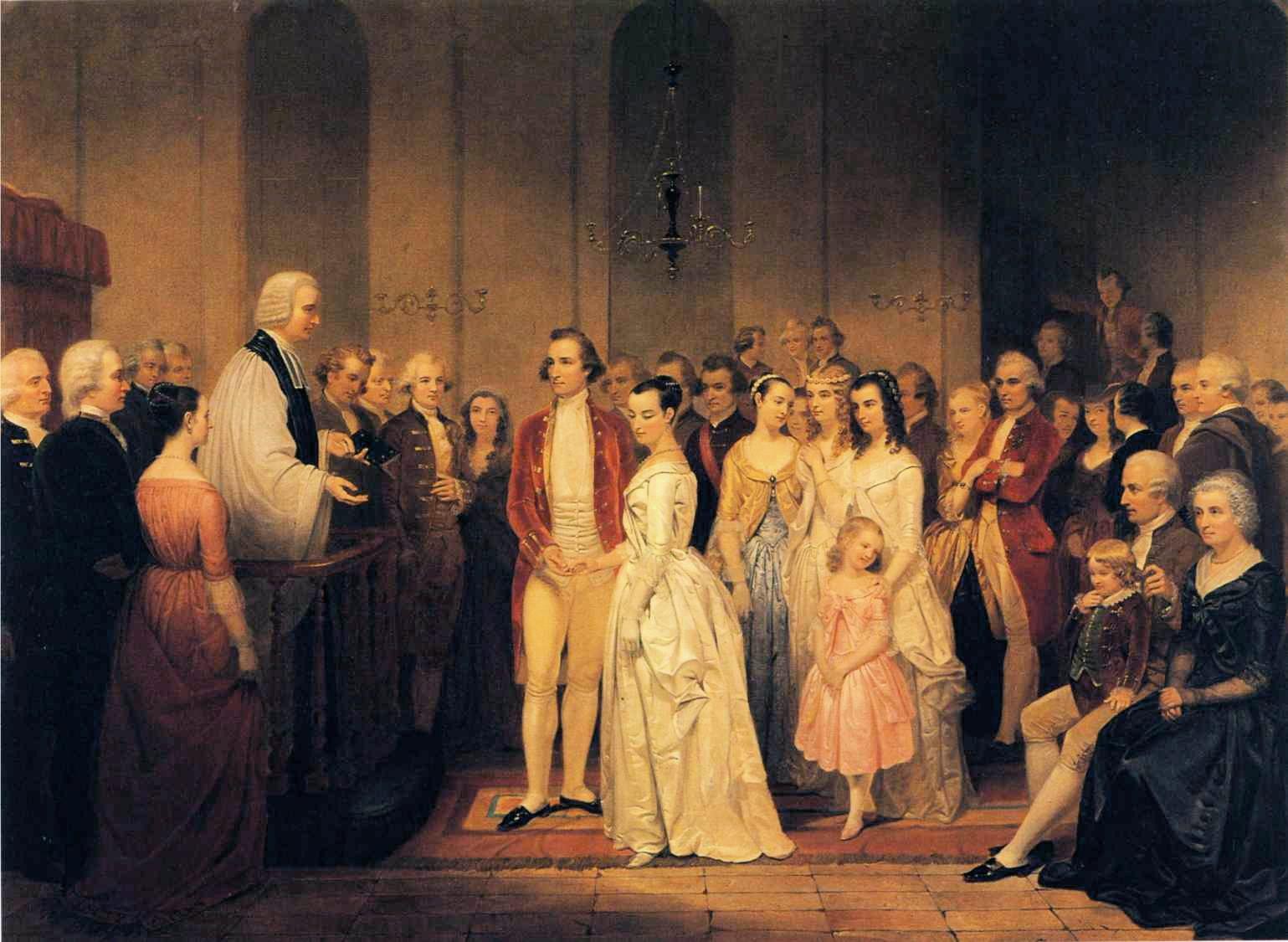
Washington Marries Martha Dandridge Custis
Washington marries Martha Dandridge Custis in January. In April, Martha arrives at Mount Vernon in April with 20 “dower slaves" inherited from a pervious marriage.
1761
Ran away from a Plantation of the Subscriber’s, on Dogue Run in Fairfax, on Sunday the 9th Instant, the following Negroes… Whoever apprehends the said Negroes, so that the Subscriber may readily get them, shall have, if taken up in this County, Forty Shillings Reward, beside what the Law allows; and if at any greater Distance, or out of the Colony, a proportionable Recompence paid them. By George Washington.
Washington's ad in the Maryland Gazette to recapture four runaway slaves
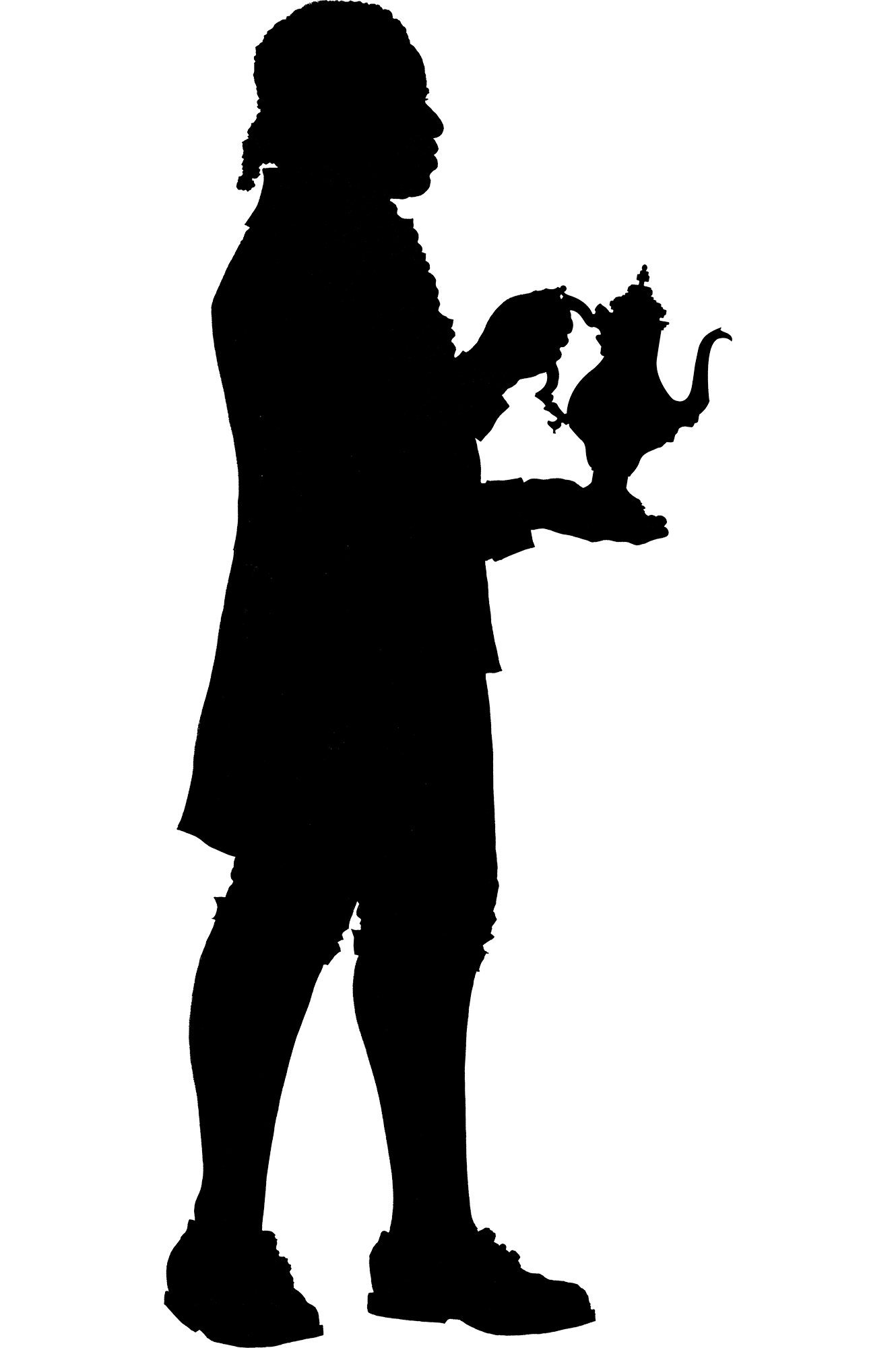
Washington Purchases "Billy" Lee
Washington purchases William “Billy” Lee from Mary Lee, a wealthy Virginian for £61.15s. William Lee will become Washington’s personal valet.
The Crisis is arrivd when we [Colonists] must assert our Rights, or Submit to every Imposition that can be heap’d upon us; till custom and use, will make us as tame, & abject Slaves, as the Blacks we Rule over with such arbitrary Sway.
Washington writes to lifelong friend, Lord Bryan Fairfax, regarding the imminent military conflict with Britain
1775
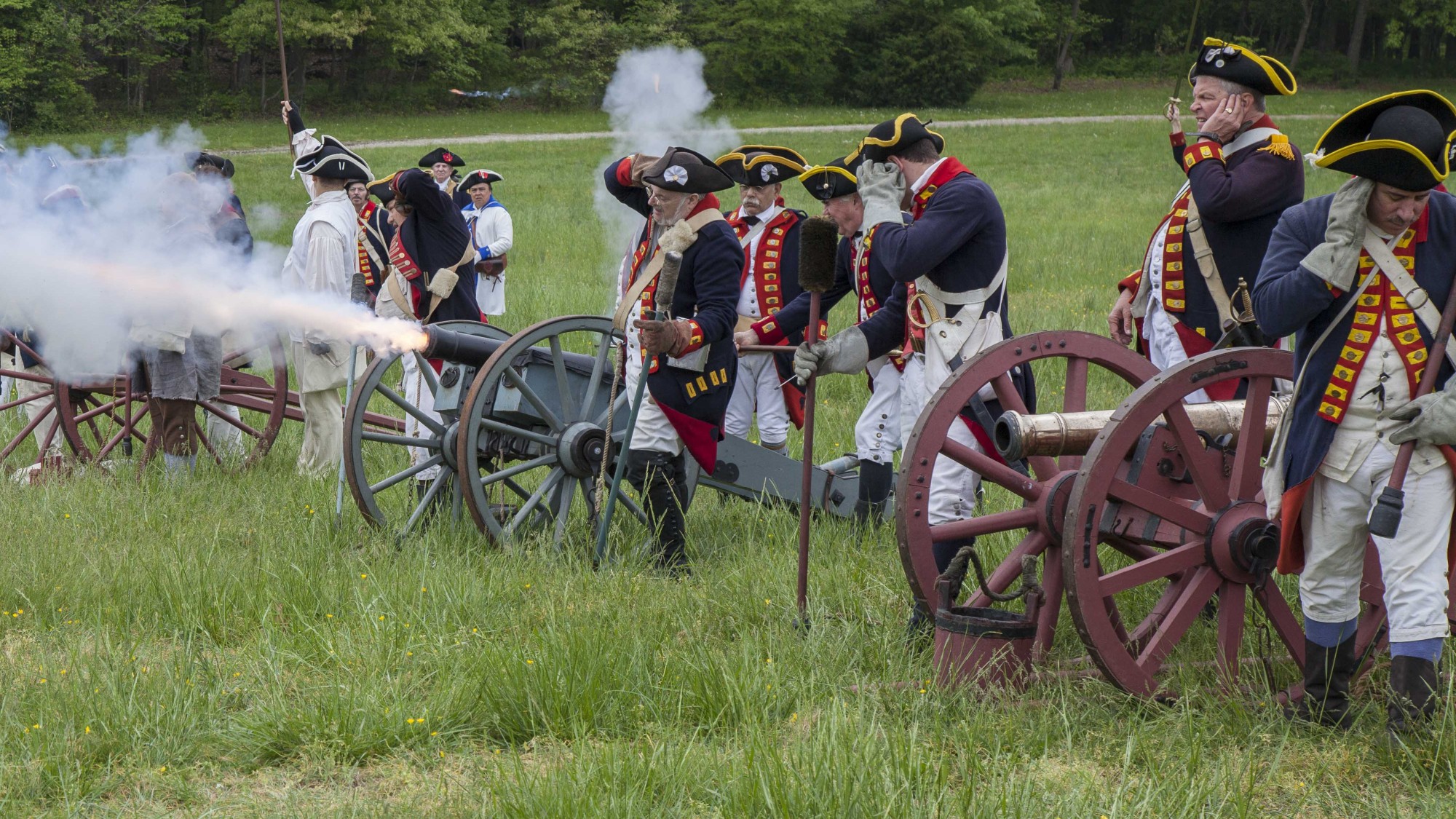
Washington Becomes Commander-in-Chief
Washington is elected unanimously and appointed Commander-in-Chief of the Revolutionary Army by the Second Continental Congress on June 15 and June 17, 1775 respectively. William Lee will attend Washington throughout the war.
[The War Council]... unanimously to reject all slaves, & by a great Majority to reject Negroes altogether” from enlisting or reenlisting in the Revolutionary Army.
General Washington’s War Council
Lord Dunmore Issues His Proclamation
Lord Dunmore, Governor of the Royal Virginia Colony issues a proclamation encouraging indentured servants and the enslaved to join the British Army. His statement reads:
“And I do hereby farther declare all indented servants, Negroes, or others (appertaining to rebels) free, that are able and willing to bear arms, they joining his Majesty’s troops, as soon as may be, for the more speedily reducing this Colony to a proper sense of their duty, to his Majesty’s crown and dignity.”
Freed Slaves Fight in Washington's Army
Washington decides to allow freed slaves to enlist in the Revolutionary Army. He writes:
“It has been represented to me, that the free Negroes who have served in this Army, are very much disatisfied [sic] at being discarded. As it is to be apprehended that they may seek employ in the Ministerial Army, I have presumed to depart from the Resolution respecting them and have given license for their being enlisted, If [sic] this is disapproved by Congress I shall put a stop to it…."
However, the enslaved remained forbidden from joining.
1778
…If Negroes could be given in Exchange for this Land of Marshalls [sic], or sold at a proportionable [sic] price, I should prefer it to the Sale of Morris[’]s Land…Having so fully expressed my Sentiments concerning this manner, I shall only add a word or two respecting Barry’s Land….For this Land also I had rather give Negroes—if Negroes would do. for [sic] to be plain I wish to get quit of Negroes….
Washington writes to his cousin, Lund.
My scruples arise from a reluctance in offering these people at public vendue, and on account of the uncertainty of timeing the sale well—In the first case, if these poor wretches are to be held in a state of slavery, I do not see that a change of masters will render it more irksome, provided husband & wife, and Parents & children are not separated from each other, which is not my intention to do... And with respect to the second, ...if a sale takes place while the money is in a depreciating state—that is, before it has arrived at the lowest ebb of depreciation; I shall lose the difference—and if it is delayed, ’till some great & important event shall give a decisive turn in favor of our affairs, it may be too late.
Washington writes again to his cousin, Lund.
The Virginia General Assembly Allows Manumission.
The Virginia General Assembly enacts legislation to allow the manumission (freeing) of enslaved people. The law allows slaveholders to free their slaves at will, without government approval. The law also orders that anyone freeing their slaves must provide support for those over or under a certain age and that slaves pay the taxes required by the state.
1785
Washington's Refusal
[T]here is not a man living who wishes more sincerely than I do, to see a plan adopted for the abolition of [slavery]; but there is only one proper and effectual mode by which it can be accomplished, and that is by Legislative authority…
Washington writes to Robert Morris criticizing the antislavery Quaker Society of Friends.
Citations
For full citations and additional contextual history, please see the timeline download (zip file format).
“I., 10 December 1754,” Founders Online, National Archives, https://founders.archives.gov/documents/Washington/02-01-02-0115-0002. [Original source: The Papers of George Washington, Colonial Series, vol. 1, 7 July 1748 – 14 August 1755, ed. W. W. Abbot. Charlottesville: University Press of Virginia, 1983, pp. 228–229.]
“Advertisement for Runaway Slaves, 11 August 1761,” Founders Online, National Archives, https://founders.archives.gov/documents/Washington/02-07-02-0038. [Original source: The Papers of George Washington, Colonial Series, vol. 7, 1 January 1761 – 15 June 1767, ed. W. W. Abbot and Dorothy Twohig. Charlottesville: University Press of Virginia, 1990, pp. 65–68.] https://founders.archives.gov/documents/Washington/02-07-02-0038.
“An Act to Prohibit the Carrying On of the Slave Trade from the United States to Any Foreign Place or Country; 3/22/1794;” “Public Law, 3rd Congress, 1st Session: To Prohibit the Carrying On of the Slave Trade from the United States to Any Foreign Place, March 22, 1794;” “Enrolled Acts and Resolutions of Congress, 1789 - 2011;” “General Records of the United States Government, Record Group 11;” National Archives Building, Washington, DC. [Online Version, https://www.docsteach.org/documents/document/slave-trade-act-1794, July 20, 2021]
“An Act To Authorize The Manumission Of Slaves, 1782.” Encyclopedia Virginia December 7, 2020. https://encyclopediavirginia.org/entries/an-act-to-authorize-the-manumi….
Cash Accounts, May 3, 1768, The George Washington Financial Papers Project. [Original source: The Papers of George Washington Digital Edition, ed. Theodore J. Crackel (Charlottesville: University of Virginia Press, Rotunda, 2008), n2.] {wwwroot}library/digitalhistory/digital-encyclopedia/article/william-billy-lee/#1
Chervinsky, Lindsay.“The Enslaved Household of President George Washington.” The White House Historical Association September 6, 2019, https://www.whitehousehistory.org/the-enslaved-household-of-president-george-washington (accessed 2019).
Coke, Thomas. Extracts of the Journals of the Reverend Dr. Coke’s Five Visits to America. London: Printed by G. Paramore, 1793, 45
“Council of War, October 8, 1775,” in The Papers of George Washington, Revolutionary War Series, Volume 2, edited by Philander D. Chase and Dorothy Twohig. Charlottesville: University Press of Virginia, 1987, pages 123 & 125.
Dunbar, Erica Armstrong. Never Caught: The Washingtons’ Relentless Pursuit of their Runaway Slave, Ona Judge. New York: 37INK, 2017.
“From George Washington to Bryan Fairfax, 24 August 1774,” Founders Online, National Archives, https://founders.archives.gov/documents/Washington/02-10-02-0097. [Original source: The Papers of George Washington, Colonial Series, vol. 10, 21 March 1774 – 15 June 1775, ed. W. W. Abbot and Dorothy Twohig. Charlottesville: University Press of Virginia, 1995, pp. 154–156.]
“From George Washington to George Lewis, 13 November 1797,” Founders Online, National Archives, https://founders.archives.gov/documents/Washington/06-01-02-0419. [Original source: The Papers of George Washington, Retirement Series, vol. 1, 4 March 1797 – 30 December 1797, ed. W. W. Abbot. Charlottesville: University Press of Virginia, 1998, pp. 469–470.]
“From George Washington to Tobias Lear, 10 March 1797,” Founders Online, National Archives, https://founders.archives.gov/documents/Washington/06-01-02-0019. [Original source: The Papers of George Washington, Retirement Series, vol. 1, 4 March 1797 – 30 December 1797, ed. W. W. Abbot. Charlottesville: University Press of Virginia, 1998, pp. 27–28.]
George Washington, General Orders, February 21, 1776, The Papers of George Washington, Revolutionary War Series, 3:350.
George Washington to Governor Charles Pinckney, March 17, 1792, The Writings of George Washington, 32:6.
George Washington, Last Will and Testament, July 9, 1799, The Writings of George Washington, 37:276-277, 282-283.
George Washington to Lawrence Lewis, August 4, 1797, The Writings of George Washington, 36:2.
George Washington to Lund Washington, August 15, 1778, The Papers of George Washington, Revolutionary War Series, 16:315-316.
George Washington to Lund Washington, February 24[-26], 1779, The Writings of George Washington, 14:147-149.
George Washington to the Marquis de Lafayette, May 12, 1786, The Writings of George Washington, 28:424.
George Washington to Robert Morris, April 12, 1786, The Writings of George Washington, 28:408.
George Washington to The President of Congress, December 31, 1775, The Writings of George Washington, 4:195.
George Washington to Tobias Lear, April 12, 1791. The Papers of George Washington, Presidential Series, Volume 8. Edited by Mark A. Mastromarino, Jack D. Warren, Jr., and Dorothy Twohig. Charlottesville: University Press of Virginia, 1999. Pages 85-86.
George Washington to Tobias Lear, May 6, 1794, The Writings of George Washington, 33:358.
Journals of the Continental Congress - Thursday, June 15, 1775 and Saturday, June 17, 1775. https://memory.loc.gov/cgi-bin/query/r?ammem/hlaw:@field(DOCID+@lit(jc00238)).
King George County Virginia Will Book A-1;1721-1752 {George Harrison Sanford King}; Pages 156-161
Lord Dunmore’s Proclamation, 1775. https://www.gilderlehrman.org/history-resources/spotlight-primary-sourc…
MacLeod, Jessie. “Lee, William (fl. 1768–1810).” Encyclopedia Virginia February 12, 2021. https://encyclopediavirginia.org/entries/lee-william-fl-1768-1810.
Memorandum, “List of Artisans and Household Slaves in the Estate” [ca. 1759], Settlement of the Daniel Parke Custis Estate, Schedule III-C, National Archives, Founders Online, [Original source: The Papers of George Washington, Digital Edition]. {wwwroot}library/digitalhistory/digital-encyclopedia/article/doll/#1
“Proceedings and Debates of the House of Representatives of the United States at the Second Session of the Second Congress, Begun at the City of Philadelphia, November 5, 1792.” Annals of Congress, 2nd Congress, 2nd Session (November 5, 1792 to March 2, 1793)," Pages 1414-15. http://memory.loc.gov/cgi-bin/ampage
“Ten Dollars Reward,” Claypoole’s American Daily Advertiser (Philadelphia, PA), May 27, 1796, p. 2. https://blogs.loc.gov/loc/2019/10/runaway-how-george-washington-and-oth…
“Washington’s Runaway Slave,” Anti-Slavery Bugle (New-Lisbon, Ohio), August 22, 1845, p. 4. https://blogs.loc.gov/loc/2019/10/runaway-how-george-washington-and-oth…
Will Of Augustine Washington. Early Colonial Settlers of Southern Maryland and Virginia’s Northern Neck Counties 2022. https://www.colonial-settlers-md-va.us/getperson.php?personIDI022490&tree=Tree1
Weekly Report, 25 February, 1797, in Mount Vernon Farm Accounts, Jan. 7, 1797—Sept. 10, 1797 (bound photostats, Fred W. Smith National Library for the Study of George Washington, Mount Vernon, Virginia), [39].