
Porthole portrait of a brown-eyed man with dark brown hair tied back into a braid, seen faintly resting halfway down his left arm. His body is facing slightly to the viewer's right, and his head is turned to the left as he looks at the viewer. He wears a white neckcloth under a green waistcoat edged with gold lace or embroidery, and a collarless red coat with gilt-thread-covered buttons. A black tricorn hat trimmed with gold lace is tucked beneath his left arm. The background behind the figure is a dark brown/black color.
This information is subject to change, as the research on this painting is ongoing.
Explore the portrait
What can be learned from a portrait and how a person is portrayed in them?
How can a work of art inform the viewer about a culture, a time period, or a place when studying portraits?
How can the information learned from viewing a work of art inform a person's perspective of a certain cultural, place, or time period?
What is missing from the work of art?
What informed the artist's color choice?
What other questions come up when viewing this artwork?
Compare and Contrast Portraits
Using the three selected portraits below, compare and contrast each portrait using a four t-chart
Ask the questions: What is different about each painting? What can be learned from each painting about the place, time period, and culture of the sitter? How are each painting similar? What questions do these paintings bring up? How can these portraits be compared to how photos of a person are taken today?
Marquis De Lafayette
Martha Washington
George Washington
Study of Portraits
After studying the portrait of Lawrence and the three used in the previous activity, along with the questions above, create a self-portrait or one of a friend.
What features are being included?
What features are being left out?
Why?
Classroom Materials downloads are ZIP files that include, when available: document images (JPEGs), document transcripts (PDF as well as Word and/or Excel files), and ready to use classroom resources (activities, discussion prompts, lesson plans, etc.). These materials are available for educational uses only. If you would like to reproduce them in any other medium, please contact Dawn Bonner, Manager of Visual Resources.
Download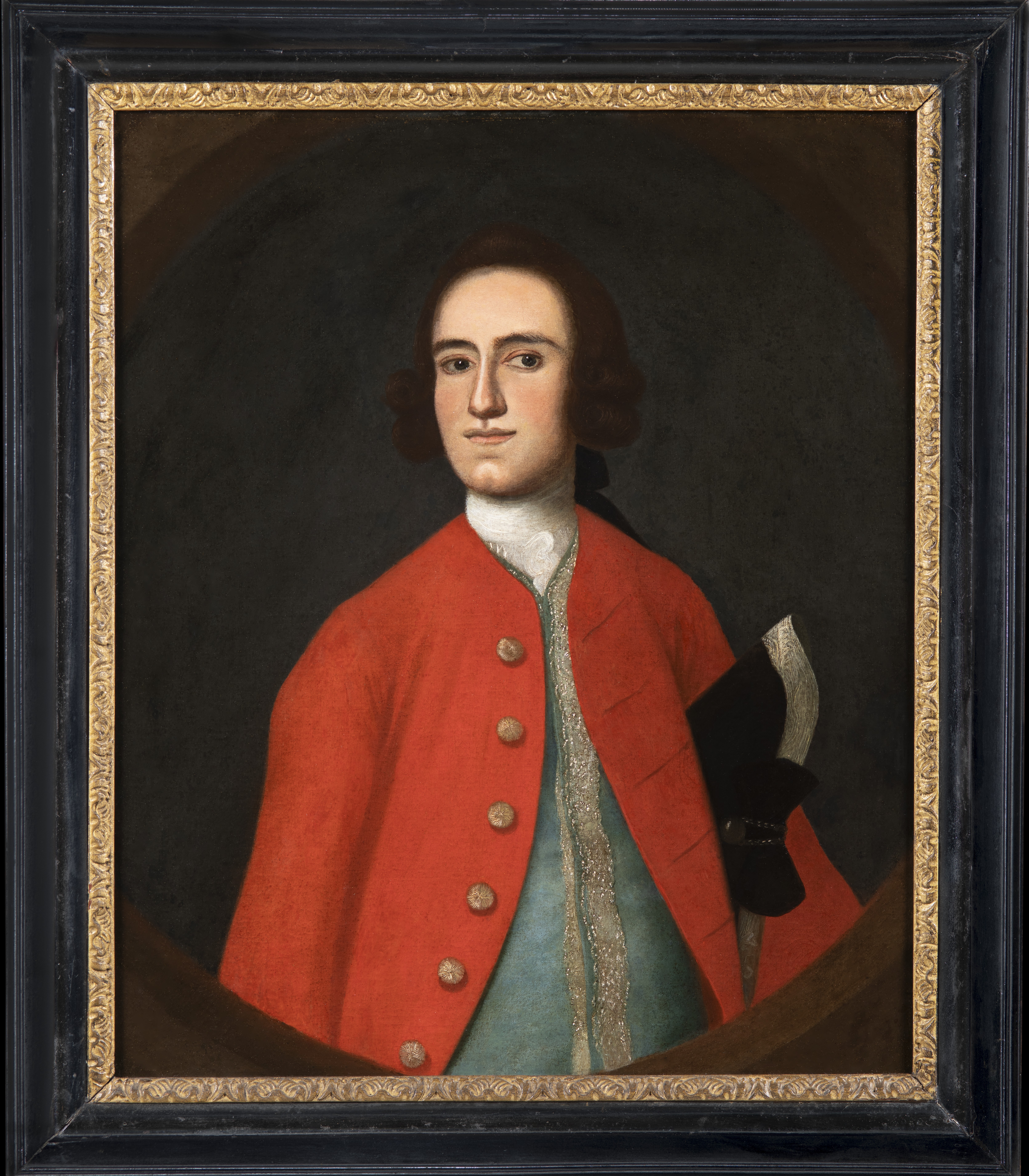
Unknown Title and Artist, c. 1743, possibly produced in the United States, Oil on Canvas, Overall: 30 1/2 in. x 25 in. (77.47 cm x 63.5 cm)
Lawrence Washington was the older half-brother of George Washington and the eldest living child of Augustine Washington and his first wife, Jane Butler. From a young age, George looked up to Lawrence, especially after their father passed away when George was only eleven. Lawrence had served as a caring mentor following George's father's death.
Lawrence's status in Virginia society was boosted because of his service in the British Royal Navy, his appointment to the Virginia government, and his marriage to Ann Fairfax. The Fairfax's were a large and influential family based in Virginia. It was largely due to the connection between the Washingtons and the Fairfax's that George was to embark on a career as a surveyor and pursue a role in the military.
Unfortunately, a lingering illness contracted while serving with the British in the Caribbean cut his life short in 1752. His loss profoundly affected George, as he had provided assistance and support throughout George's teenage years.
In 1761, George inherited Mount Vernon from Lawrence's widow. He placed his half-brother's portrait in his private chamber in the Mansion, his Study - a fitting tribute to the man who helped make him who he was.