
With the Continental Army threatening to dissolve around him, General George Washington led the remnants of his army across the icy Delaware River on Christmas night 1776 and routed a Hessian garrison at Trenton.
The subsequent victories at the Battles of Second Trenton and Princeton secured Washington's place as one of the greatest generals in world history.
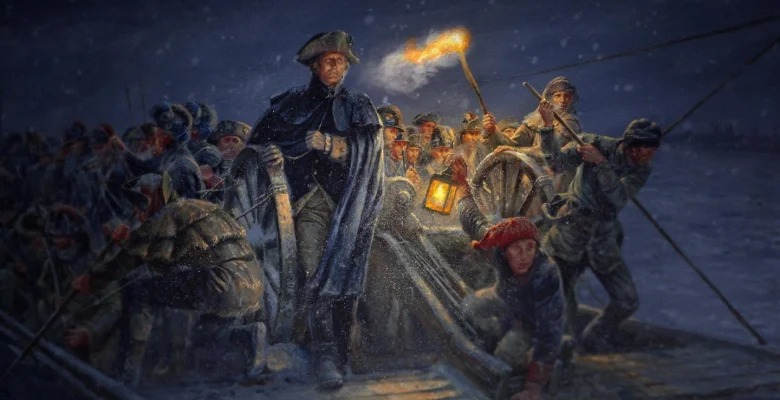
The Winter Patriots
Watch our film on Washington's great victories at the Battles of Trenton and Princeton.
Watch
Crossing the Delaware River
Learn more about how and why Gen. George Washington decided to cross the icy Delaware River on the evening of December 25, 1776.
Learn More
The Battle of Trenton
After crossing the Delaware, Gen. George Washington attacked the Hessian garrison at the Battle of Trenton.
Learn More
10 Facts about the Battle of Princeton
Learn more about the remarkable Battle of Princeton - Gen. George Washington's great victory over the British on January 3, 1777.
Learn More
The Hessians
Who were the Hessians and why were they fighting against Gen. George Washington's army?
Learn MoreLessons in Leadership
Act Boldly
Learn how Washington's leadership during the darkest moments of the Revolution changed history.
Video
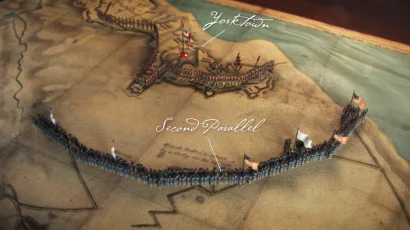
Now or Never: Yorktown Campaign
Watch this video to learn more about the last major battle of the American Revolution.
The Crucial Revolutionary War Battles Of Princeton and Trenton
Rick Atkinson, best-selling author and winner of the Pulitzer Prize, explores two crucial battles of the Revolutionary War.
Revolutionary War Theater 4D Experience
This immersive movie experience traces General Washington's important military victories at Boston, Trenton, and Yorktown. See it in the 4-D theater in the Donald W. Reynolds Museum & Education Center at Mount Vernon.
Learn moreThe Trenton-Princeton Campaign
See paintings and photos from Washington's great winter campaign of 1776-1777
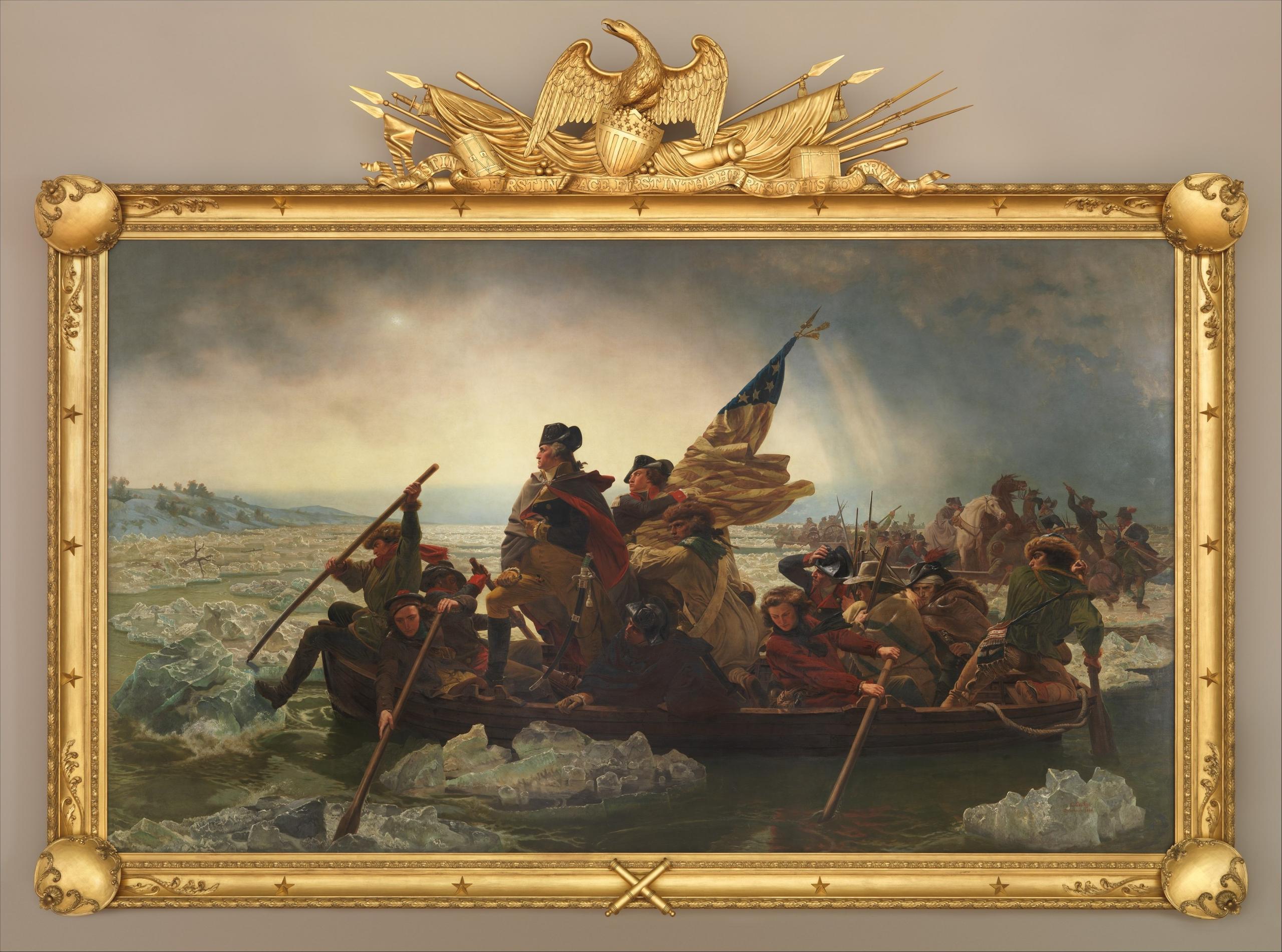
Washington Crossing the Delaware
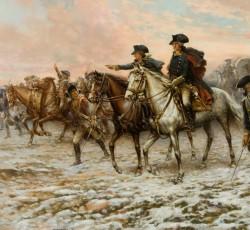
The March to Trenton
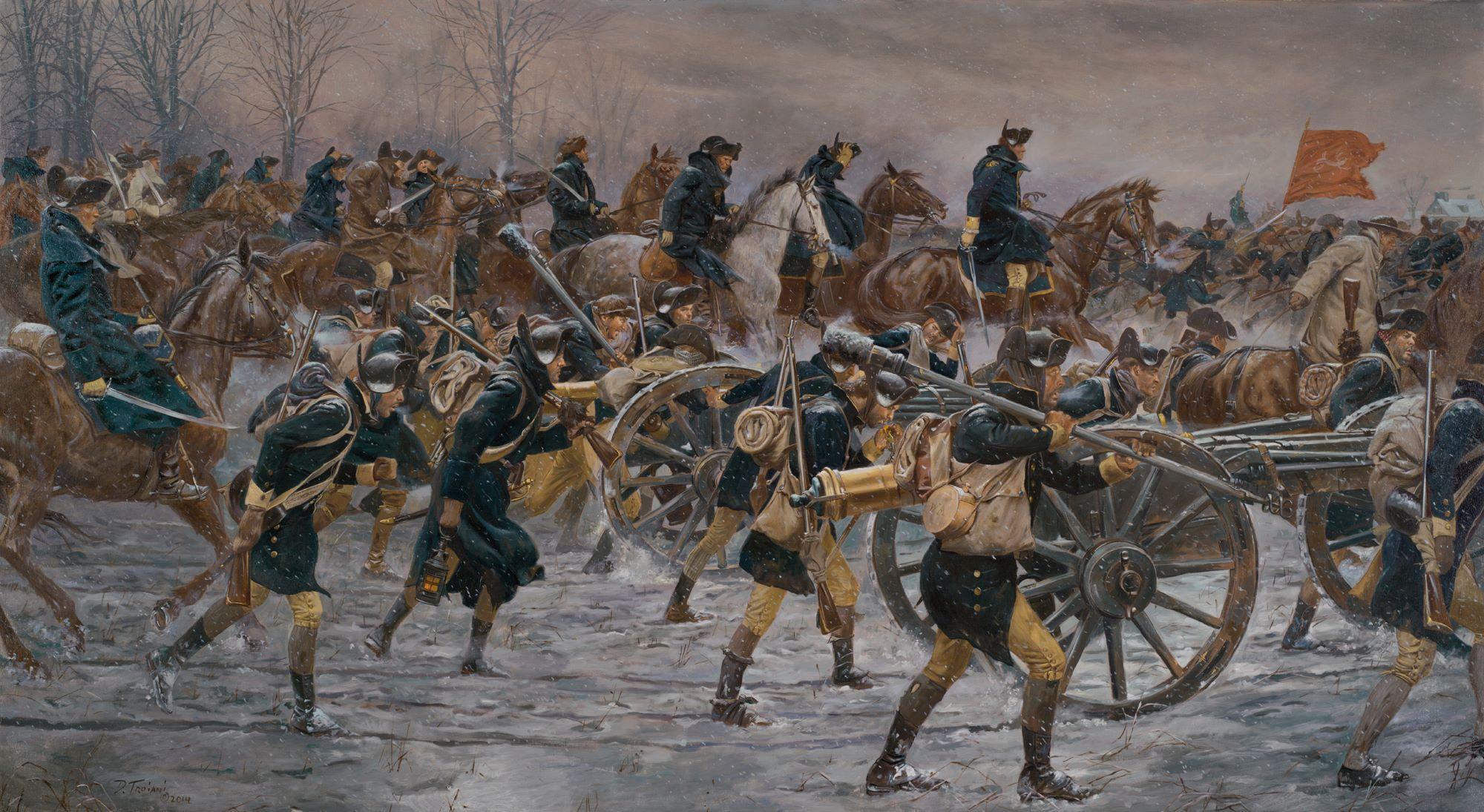
Washington's Continentals Approach Trenton
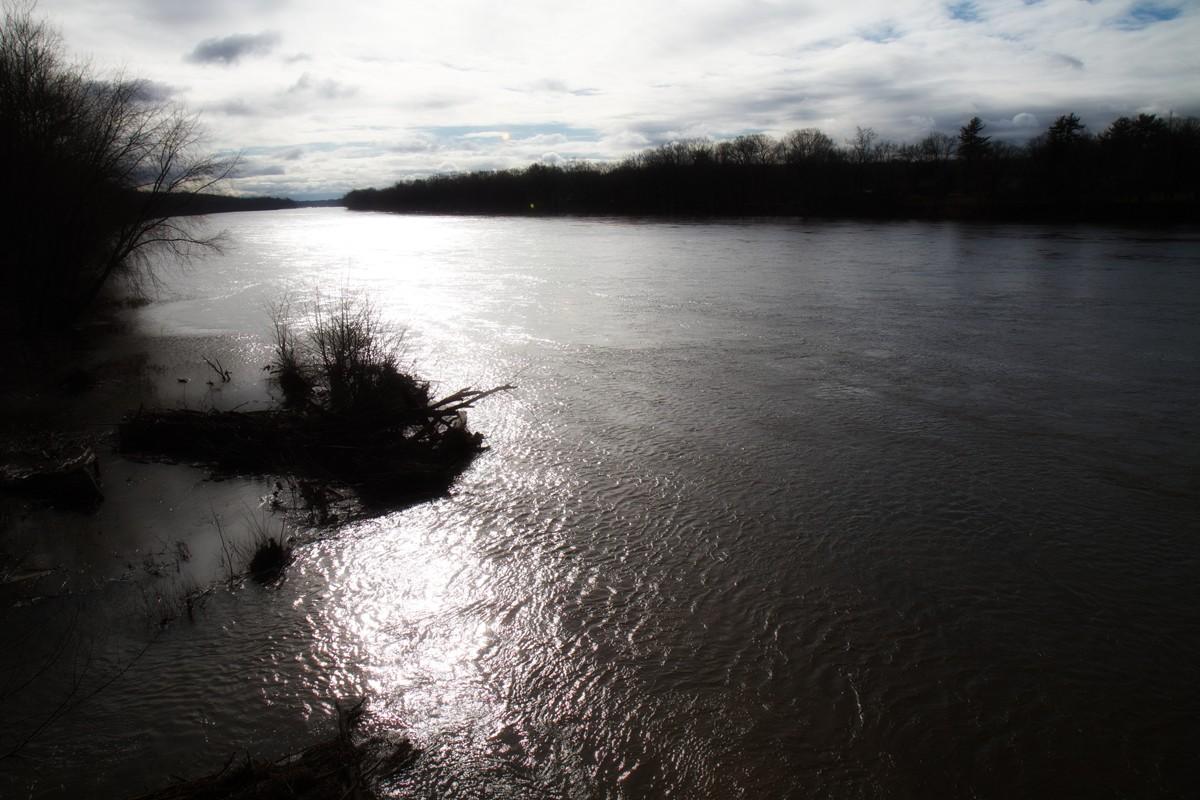
The Delaware River
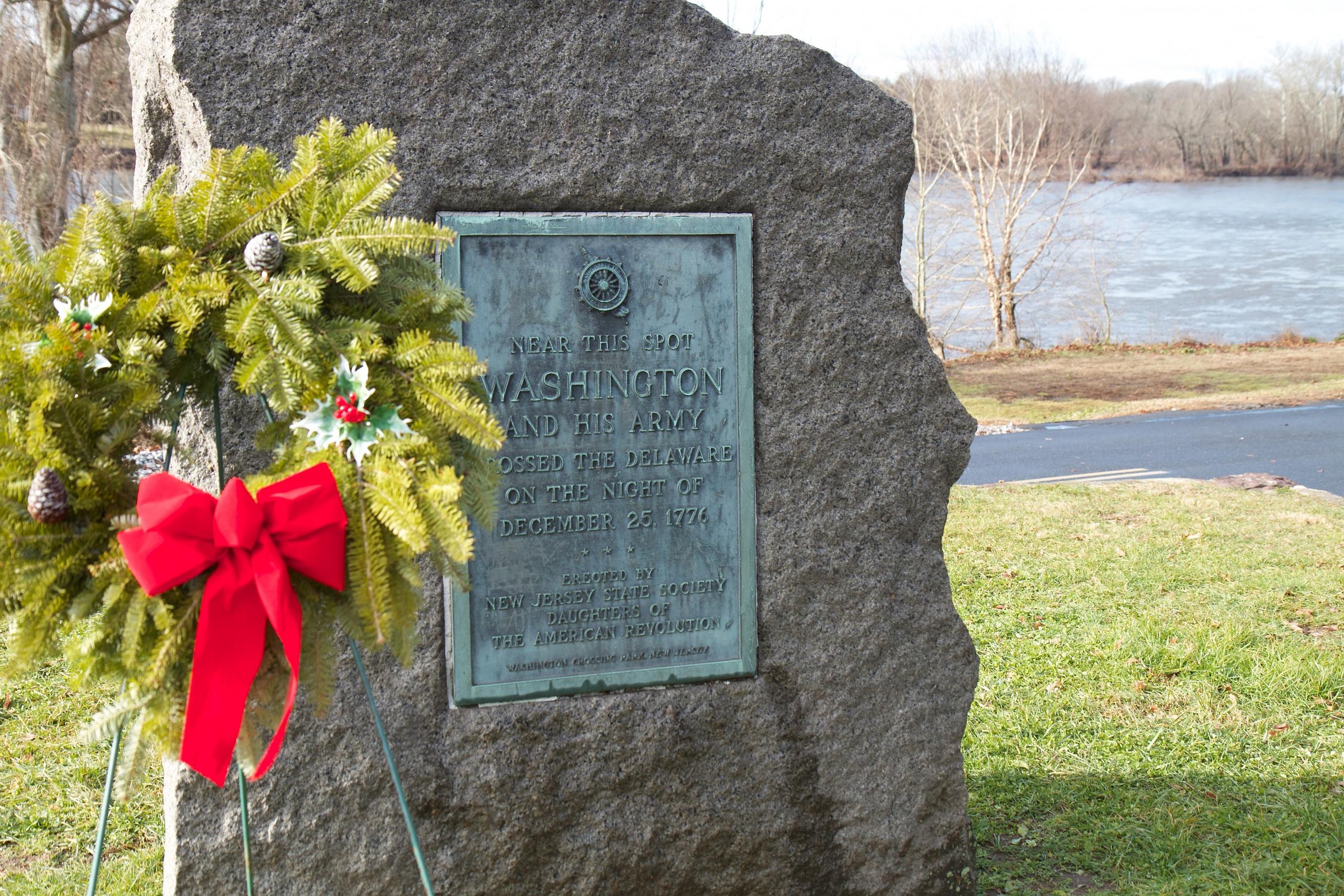
Where Washington Crossed
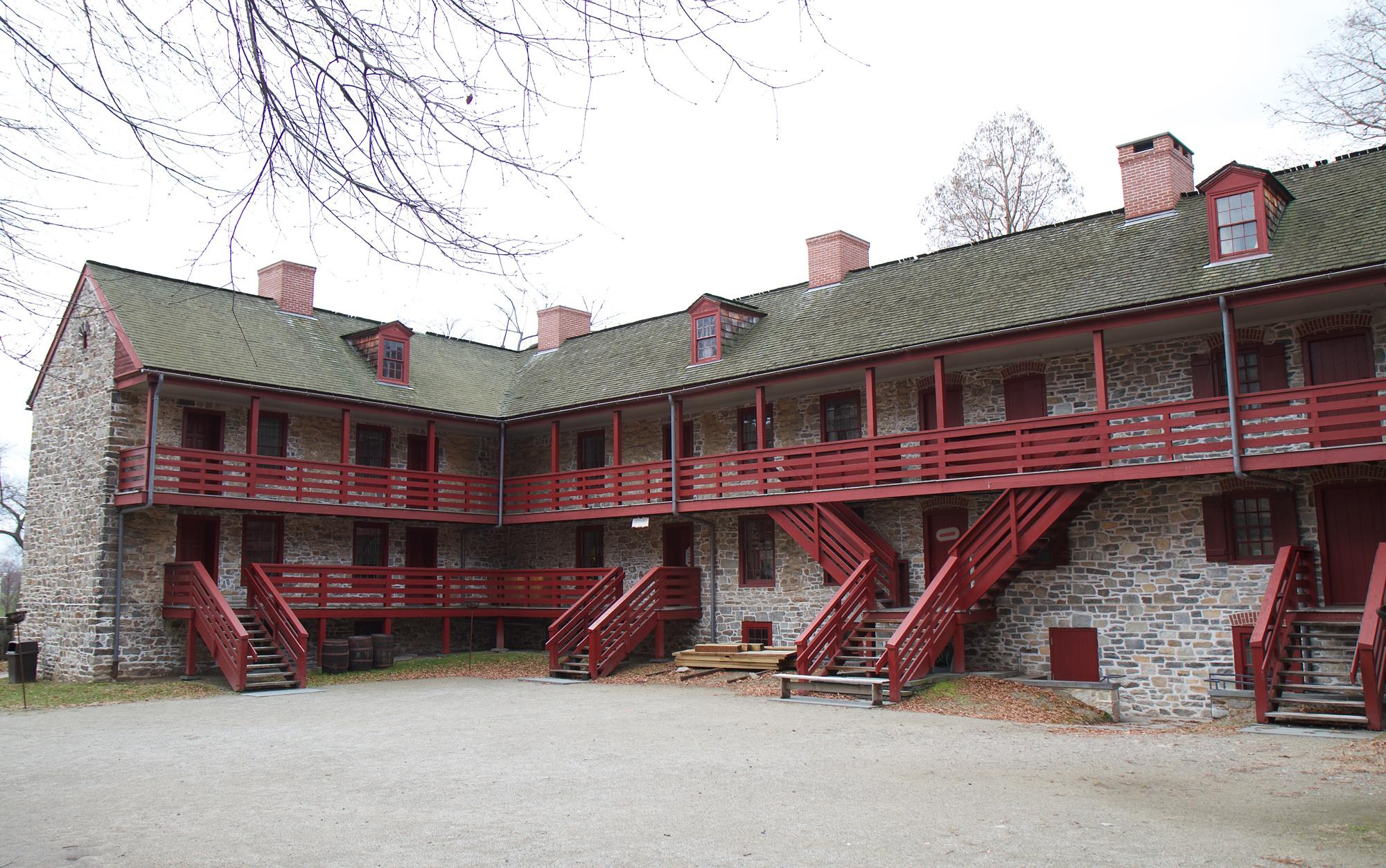
The Hessian Barracks
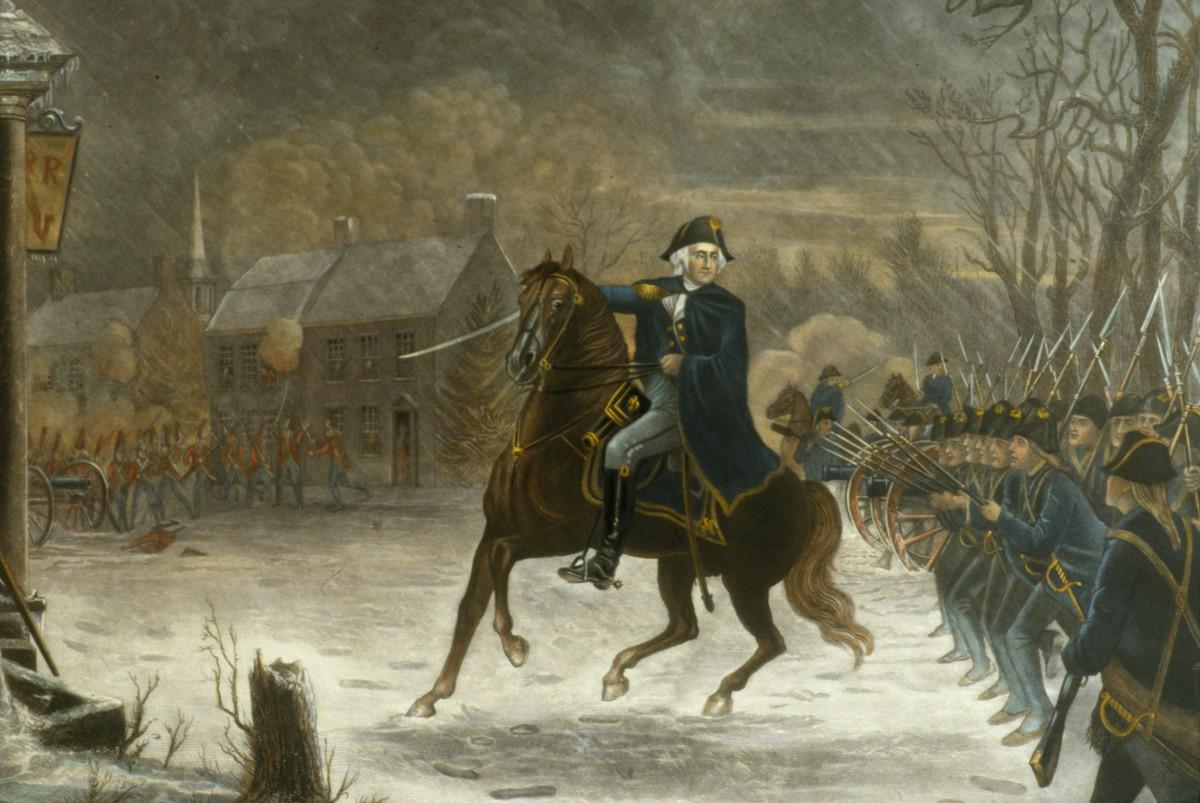
Washington at Trenton
The Attack on Trenton
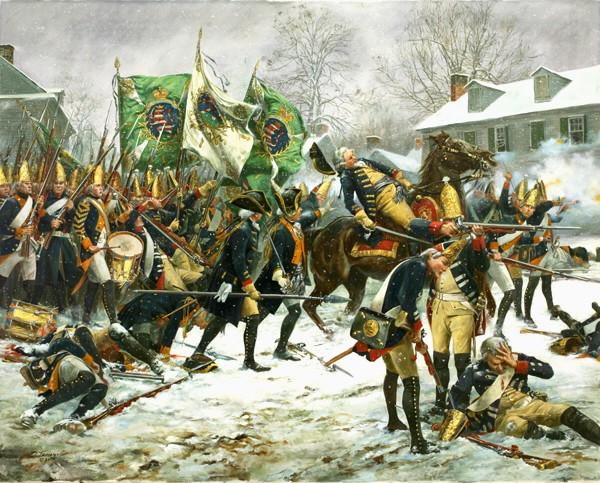
The Death of General Rall
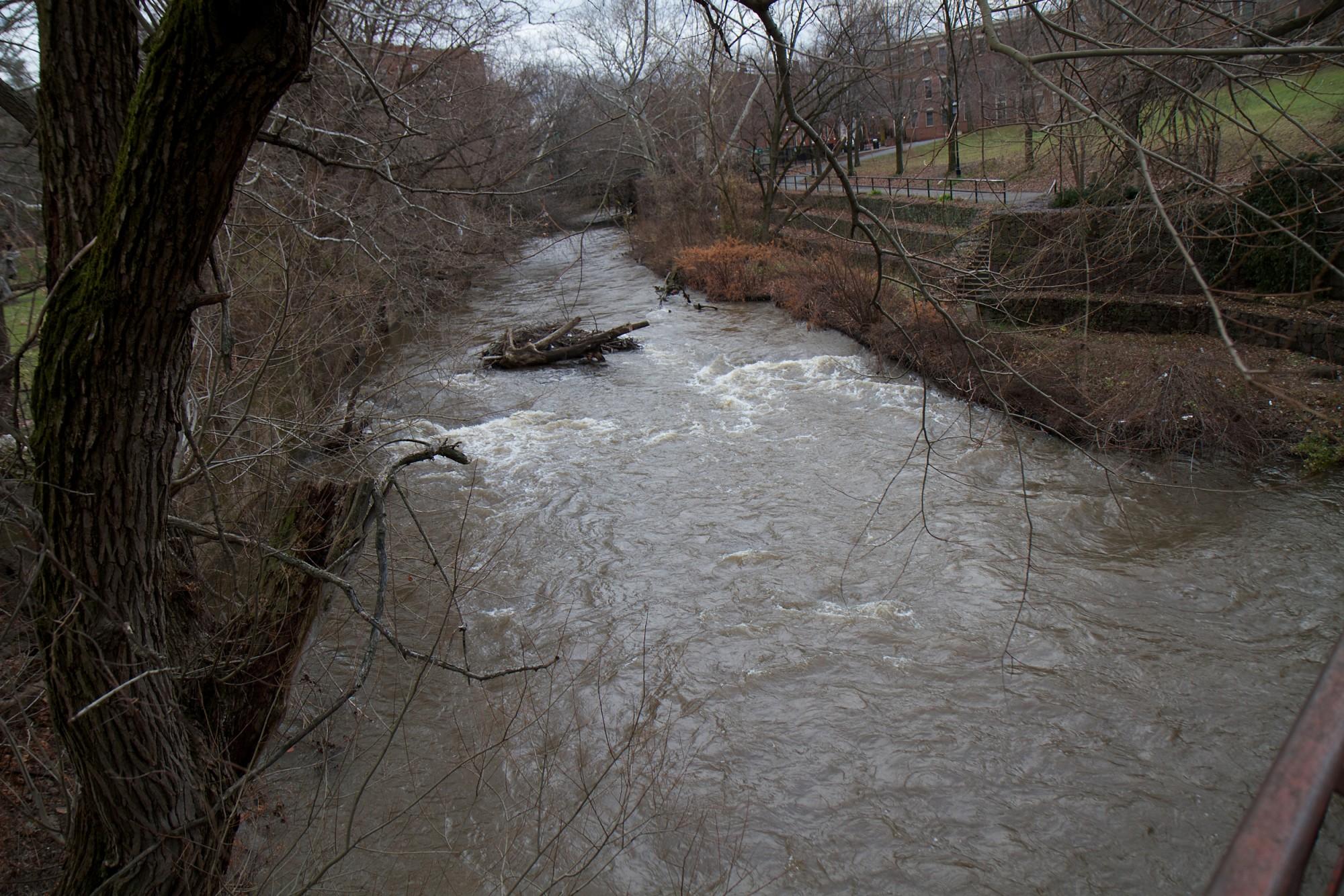
The Assunpink Creek
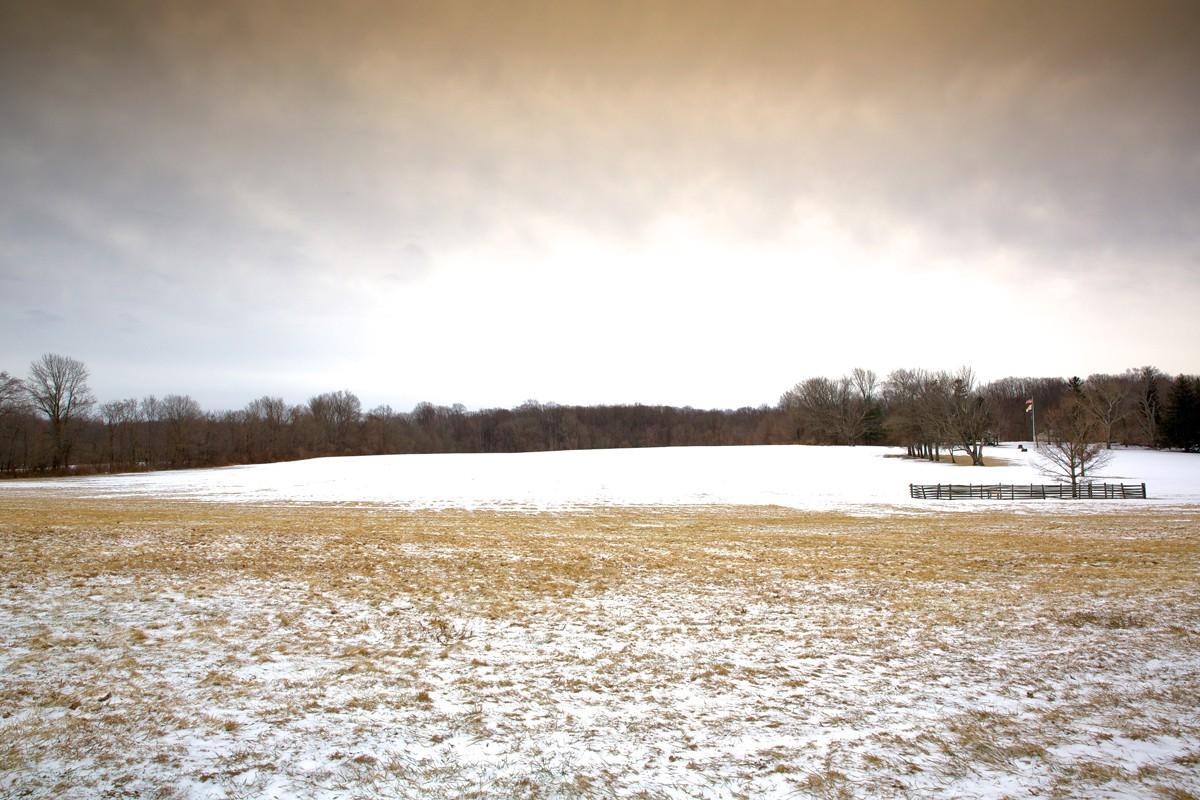
The Princeton Battlefield
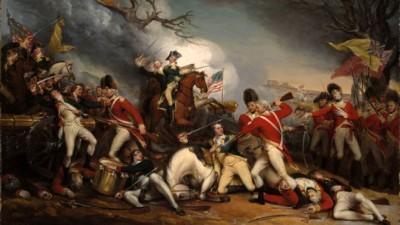
The Death of General Mercer
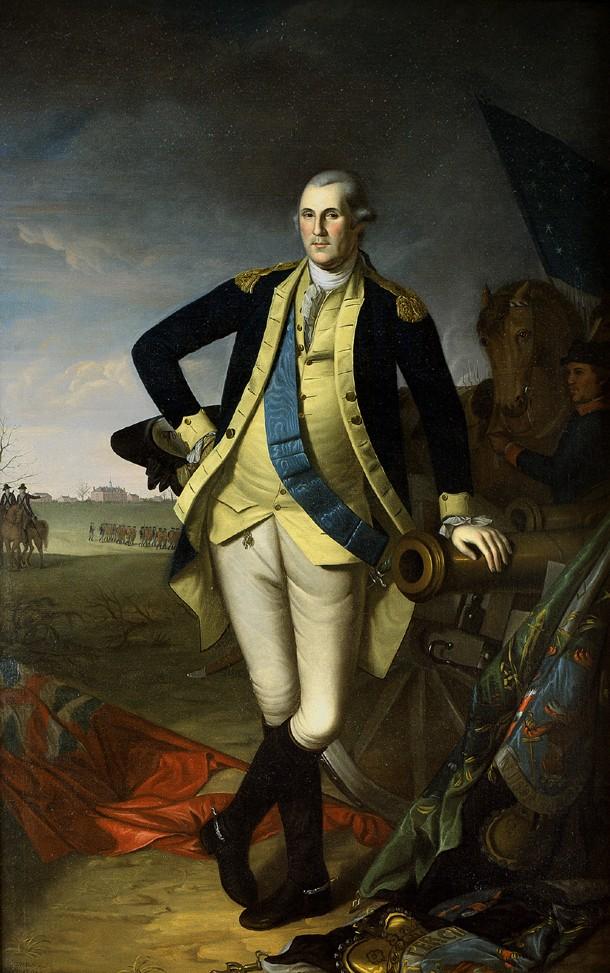
Washington at Princeton
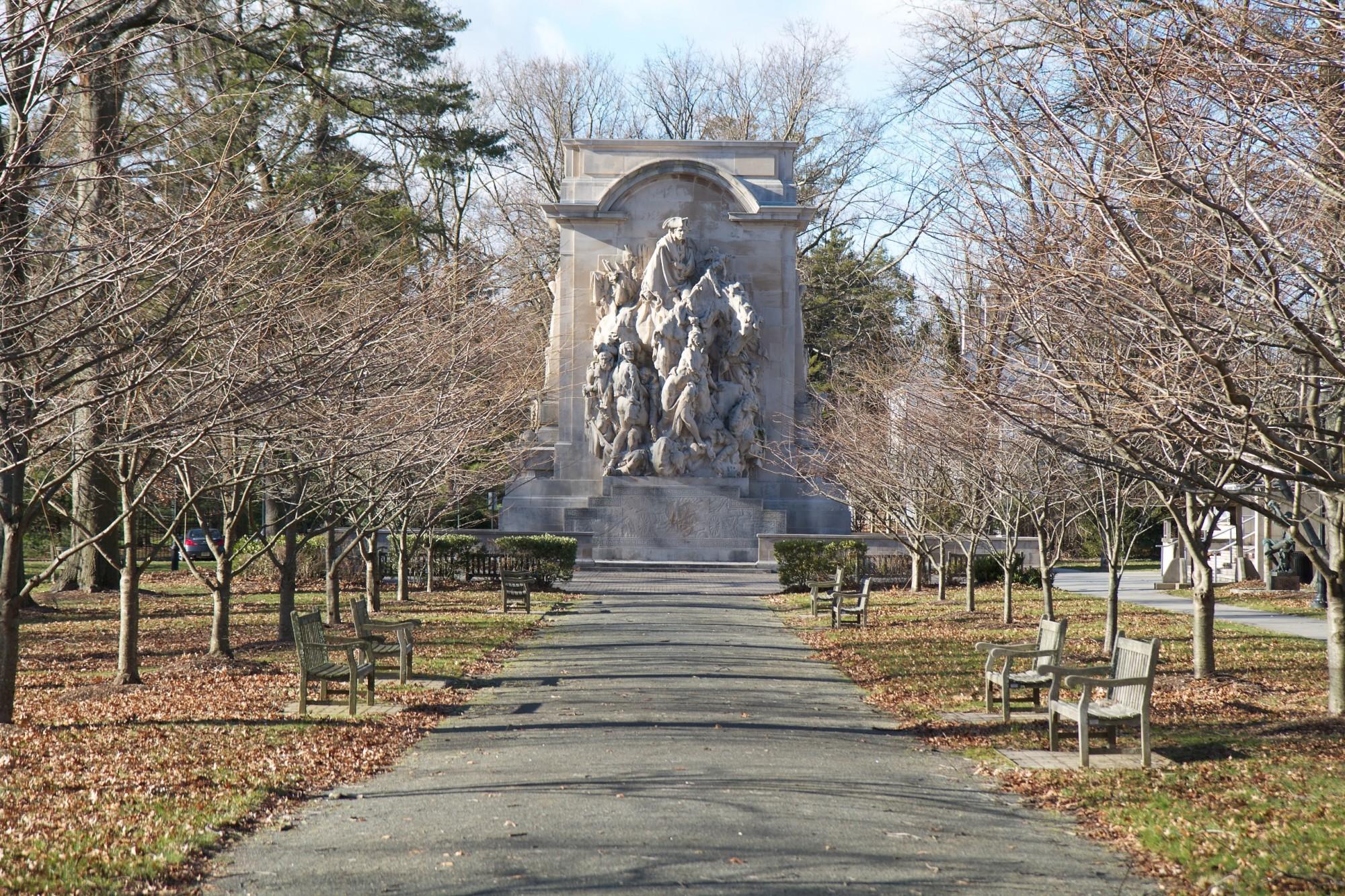
The Princeton Victory Monument
MAPS
Maps of the Trenton-Princeton Campaign
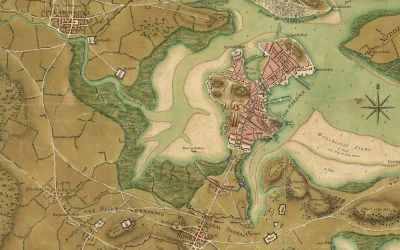
This map shows the Boston area in 1775 - about the time that Washington and the Continental army were besieging the British within Boston By Sir Thomas Hyde Page in 1776.
Source: Library of Congress, Maps Division http://hdl.loc.gov/loc.gmd/g3764b.ct000070
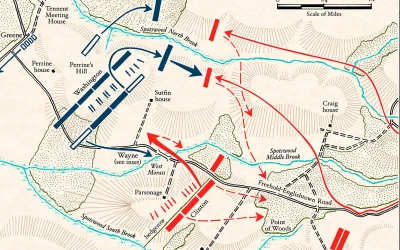
British forces attack across the Spotswood Middle Brook and are driven back under heavy fire. "The Great Cannonade" - an artillery duel commences and later General George Washington orders his forces forward as the British army departs the field of battle. Washington claims the battle as a victory since his troops hold the field of battle at the end of the long day. Learn more: The Battle of Monmouth
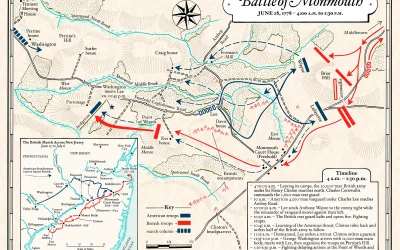
View of the morning and early afternoon actions at the June 28, 1778 Battle of Monmouth. During this phase, Continentals under the command of Charles Lee encounter and engage British forces near the town of Monmouth Court House (Freehold). British general Henry Clinton returns to the scene of the action and orders half of his force to pursue the Americans who retreat under heavy attack. George Washington arrives with the 11,000 man body of the Continental Army and learns of the morning setbacks. Washington organizes his main body on Perrine's Hill. Learn more: The Battle of Monmouth
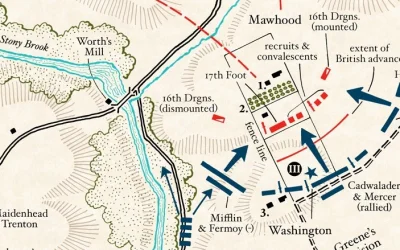
Battle map showing the action on the Princeton battlefield from 8:20am till 8:45am on January 3, 1777. During this phase of the battle, Gen. George Washington had rallied the troops on the Clarke Farm and had led them forward against the British. The larger American force broke the British line and chased the remnants into the surrounding countryside.
Battle of Princeton: 10 Facts about the Battle of Princeton
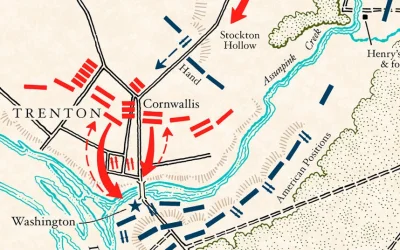
After the stunning victory over the Hessians on December 26, 1776, Gen. George Washington recrossed the Delaware and took up a strong defensive position along the Assunpink Creek next to the town of Trenton, New Jersey. Around 5:00pm on January 2, 1777 British Gen. Charles Cornwallis ordered three separate attacks that were all beaten back with heavy casualties.
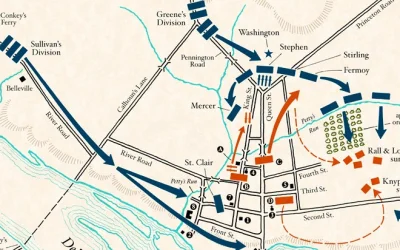
This map shows George Washington’s triumph at Trenton, New Jersey. After crossing the icy Delaware River late on Christmas Day 1776, Washington’s forces struck the Hessian garrison in Trenton on the morning of December 26. Washington’s attack mortally wounded Col. Johann Rall, the Hessian commander, killed 22, wounded another 83, and led to the capture of more than 890 Hessian soldiers. This stunning victory served to rebuild American morale after a summer of defeats and setbacks.
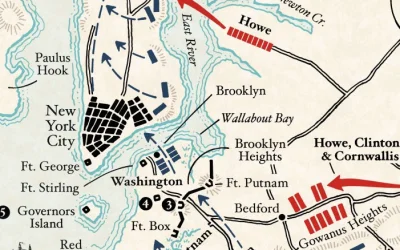
This Mount Vernon produced map shows the region around New York City that became the focal point of the American Revolution during the Summer and Fall of 1776. This map shows the Battle of Long Island and other campaign actions including the Battle of Kip's Bay, The Battle of Harlem Heights, The Battle of Fort Washington, and the capture of Fort Lee. The large British army under the command of General William Howe drove the Continental Army from this region and down through New Jersey. Washington's army suffered tremendous casualties and was on the brink of total defeat after this campaign.
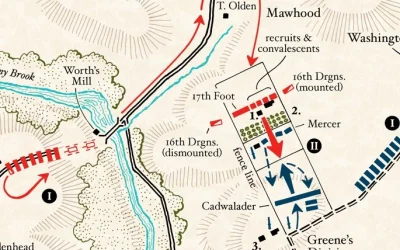
After the Battle of Assunpink Creek on January 2, 1777, George Washington and his Continental Army departed during the night of January 2nd and marched north towards Princeton, New Jersey. Early on the morning of the 3rd, elements of Washington's army encountered a detachment of British troops marching towards Trenton. The British forces under the command of Lt. Col. Charles Mawhood turned to engage American forces on the Clarke Farm south of town. Hugh Mercer's column broke in the face of the British advance and Mercer was bayoneted. A second American force under the command of John Cadwallader advanced on the British, but it too began to fall back under pressure. Only with the arrival of Gen. Cadwallader and Gen. Washington did the men rally and drive back the British.
Map showing the opening phases of the Battle of Princeton (January 3, 1777)
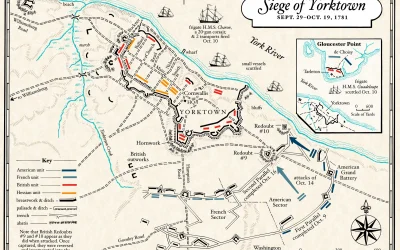
This detailed map looks at the the British, Hessian, French, and American positions at Yorktown in October 1781. The map shows the attacks on Redoubts 9 and 10 - the attacks that led to Cornwallis' surrender.
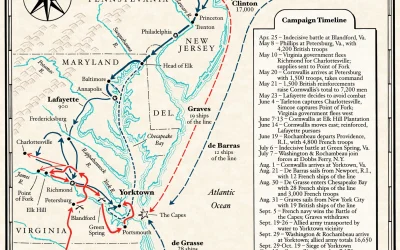
This campaign level map shows the entire theater of operations for the 1781 Yorktown Campaign - the military campaign where Washington and his French allies defeated Lord Cornwallis and the British and Hessian forces at Yorktown, Virginia.
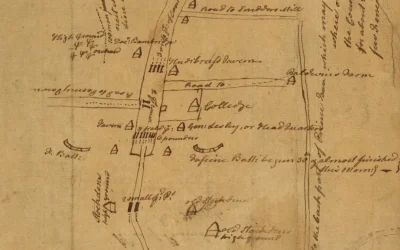
George Washington received this hand-drawn map as he was marching north from Trenton to attack the British positions around Princeton, New Jersey. Drawn by John Cadwalader, the information reportedly was derived by an unnamed Princeton student who had observed the British positions around the town. The intelligence contained in this map helped shape Washington's plan of attack.
Source: Library of Congress Maps Division http://lccn.loc.gov/gm71000925
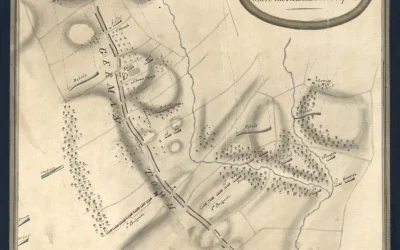
A Sketch of the Battle of German. Tn., 4th October 1777, where the rebels were repulsed. 1777
Source: Library of Congress, Maps Division http://hdl.loc.gov/loc.gmd/g3824p.ar134400
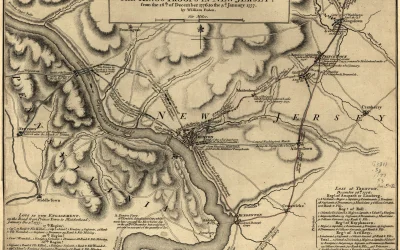
Plan of the operations of General Washington, against the Kings troops in New Jersey, from the 26th. of December, 1776, to the 3d. January 1777. By William Faden in London, 1777.
Source: Library of Congress, Maps Division http://hdl.loc.gov/loc.gmd/g3811s.ar126900
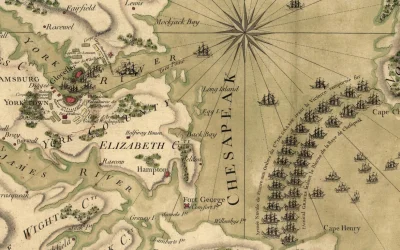
Carte de la partie de la Virginie ou l'armée combinée de France & des États-Unis de l'Amérique a fait prisonnière l'Armée anglaise commandée par Lord Cornwallis le 19 octobre. 1781, avec le plan de l'attaque d'York-town & de Glocester. By Esnauts et Rapilly in Paris, 1781?
Source: Library of Congress, Maps Division http://hdl.loc.gov/loc.gmd/g3884y.ar146200
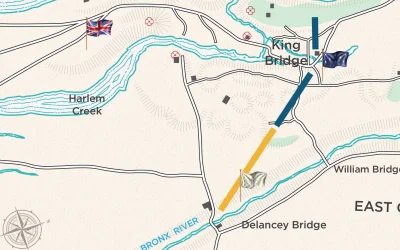
Retaking New York from the occupying British and Hessian forces was General Washington’s primary goal in July of 1781. He knew that this would be a difficult task, and planned a reconnaissance-in-force to accomplish his mission.