Magnolio, sometimes referred to as Magnolia, was an Arabian horse owned by George Washington. Arabian horses were prized for their size and strength, and they were imported to locations such as Virginia to improve local breeding stock. Washington purchased him for five hundred pounds from the estate of his stepson, John Parke Custis sometime in 1785.1 Magnolio was described as being of chestnut color and of standing nearly fifteen hands high.2 A stallion of sizeable size, Washington planned to breed him.
Horses were central to life in the Early Republic. They were used for transportation, field work, and in the increasingly professionalized world of horse racing. While Washington relied on riding horses such as Nelson and Blueskin for transportation and work horses such as Grunt and Diamond to plow, Magnolio’s purpose at Mount Vernon was somewhat different. Washington’s farm manager, Lund Washington, advertised Magnolio in Alexandria newspapers as available to breed at a rate of five pounds a season to other horse owners.3 Animal breeding was not a new concept at Mount Vernon. However, Washington’s plan to generate a profit from selective breeding using an imported horse to improve the local horse population beyond Mount Vernon was influenced by his engagement with the new husbandry. Inspired by figures such as Arthur Young, he was consistently seeking new means to profit from crops and livestock at Mount Vernon. A breeding program for horses was a part of that vision.
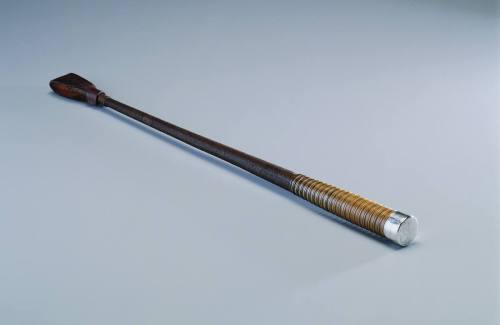
After advertising Magnolio as “finely formed” and “perfect,” Washington attracted some attention from the equestrian community in Virginia.4 Jean Le Mayeur of Richmond wrote to Washington that he would rather his “mares going to him [Magnolio] than any one I have seen in America.”5 In April of 1786, Le Mayeur sent his horse to Mount Vernon to be bred with Magnolio. However, Mayeur requested that his horse, who was causing “trouble,” be returned home without being successfully bred.6 Establishing a breeding program of this scale at Mount Vernon was challenging and costly. In breeding Magnolio with other horses at Mount Vernon, Washington had some success. Recorded in October of 1787, Magnolia sired at least two colts at Mount Vernon.7 Peter Hardiman, an enslaved groom, would have been responsible for attending to Washington’s horses. Hardiman also played a role in managing and arranging when horses such as Magnolio would be suitable to be bred with other horses, providing care to mares as well.8
An Arabian horse as impressive as Magnolio created considerable interest. Henry “Light Horse” Lee, a nearby neighbor and friend to Washington, desired to buy Magnolio.9 In late 1788, Washington negotiated the sale of two tracts of land owned by Lee in Kentucky in exchange for Magnolio. Washington warned Lee of the expenses related to keeping Magnolio in “high health, spirits, and flesh,” and indicated his intention to focus on breeding mules instead of horses.10 As Washington looked west to expand his agricultural interests, this was an advantageous trade as breeding Magnolio had been largely unprofitable. Washington hoped to sell the five thousand acres he acquired in present-day Grayson County, but they were listed in his schedule of property the year of his death in 1799.11
Magnolio was embolic of Washington’s efforts to embrace new husbandry and his devoted interest to agricultural expansion. While Magnolio as a horse for breeding was ultimately not a profitable venture, Washington pivoted, and used this asset to further his interests in western lands.
Zoie Horecny, Ph.D.
Notes:
1. “Ledger B, 1772-1793: pg. 224,” The George Washington Financial Papers Project.
2. “Magnolio,” Virginial Journal and Alexandria Advertiser, 24 March 1785; 7 April 1785; 14 April 1785.
3. “Magnolio,” Virginial Journal and Alexandria Advertiser, 24 March 1785; 7 April 1785; 14 April 1785.
4. “Magnolio,” Virginial Journal and Alexandria Advertiser, 24 March 1785; 7 April 1785; 14 April 1785.
5. “Jean Le Mayeur to George Washington, 10 April 1786,” Founders Online, National Archives.
6. “Jean Le Mayeur to George Washington, 10 April 1786,” Founders Online, National Archives; “14 April 1786,” Founders Online, National Archives.
7. “[Diary entry: 15 October 1787],” Founders Online, National Archives.
8. “George Washington to William Fitzhugh, 2 July 1786,” The Papers of George Washington Digital Edition. Charlottesville: University of Virginia Press, Rotunda, 2008. [Original source: Confederation Series (1 January 1784–23 September 1788), Volume 4 (2 April 1786–31 January 1787).] Enslaved grooms such as Peter Hardiman maintained breed programs at Mount Vernon, as farm manager George Augustine Washington remarked that Peter was “very attentive to that business indeed his time is almost intirely ingrossed by it.” “George Augustine Washington to George Washington, 16 July 1790,” The Papers of George Washington Digital Edition. Charlottesville: University of Virginia Press, Rotunda, 2008. [Original source: Presidential Series (24 September 1788–3 March 1797), Volume 6 (1 July 1790–30 November 1790).]
9. “[9 December 1788]” Founders Online, National Archives.
10. “George Washington to Henry Lee, 30 November 1788,” Founders Online, National Archives.
11. “Enclosure: Schedule of Property, 9 July 1799,” Founders Online, National Archives.
Bibliography:
Anderson, Virginia DeJohn. Creatures of Empire: How Domestic Animals Transformed Early America. Oxford University Press, 2004.
Anderson, Virginia DeJohn. “Animals into the Wilderness: The Development of Livestock Husbandry in the Seventeenth-Century Chesapeake.” The William and Mary Quarterly 59, no. 2 (2002): 377–408.
Cronon, William. Changes in the Land: Indians, Colonists, and the Ecology of New England. Hill and Wang, 1993.
McShane, Clay and Joel Tarr. The Horse in the City: Living Machines in the Nineteenth Century. John Hopkins University Press, 2007.
Raber, K. and T. Tucker, eds. The Culture of the Horse: Status, Discipline, and Identity in the Early Modern World. Plagrave Macmillan, 2026.
Ragsdale, Bruce A. Washington at the Plow: The Founding Farmer and the Question of Slavery. Harvard University Press, 2021.